Hunky Dunky: A Retro-Modern Typeface with Real Character
When you're building a brand or designing a project that needs to stand out, the typeface you choose does a lot of heavy lifting. It sets the mood before a single word is read. That's where Hunky Dunky comes in—a premium font that doesn't just sit quietly on the page. It has personality. Think of it as the design equivalent of a perfectly worn-in vintage band tee: confident, a little nostalgic, and effortlessly cool.
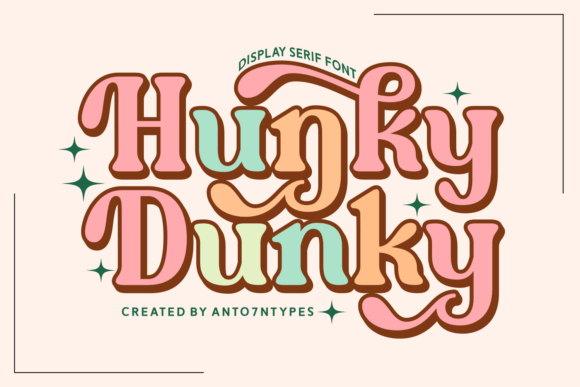
At its core, Hunky Dunky is a bold display typeface. It's not trying to be a workhorse for body text; it knows its job is to grab attention. The letterforms feature a wonderful tension between clean, structured lines and soft, groovy curves. You'll notice the gentle swelling on the terminals of the 'a' and 'e', the playful loops on the 'g' and 'y', and the distinctive, almost sweet counters that give each character an inviting openness. It's a font that feels handmade but polished, reminiscent of hand-lettered signage from a sunny afternoon, yet refined enough for modern logo design and editorial design.
Where Hunky Dunky Truly Shines
Understanding a font's strengths is key to using it effectively. Hunky Dunky thrives in contexts where you need to make an immediate, positive impression without saying a word. Its inherent friendliness and retro charm make it a fantastic choice for projects targeting audiences who appreciate authenticity and creativity.
For brand identity, this typeface is a secret weapon. Imagine it on the logo for a boutique coffee roaster, a craft brewery, or a line of artisanal ice cream. It communicates warmth, quality, and a touch of fun. It's equally at home on packaging design—think a bold label for a new hot sauce or a whimsical box for gourmet cookies. The font's character helps products tell a story on the shelf.
In the world of publishing, Hunky Dunky is a standout for book covers, especially in genres like contemporary romance, feel-good fiction, or lifestyle guides. Its inviting style promises an engaging read. For magazine headlines and pull quotes, it injects energy and breaks the monotony of standard serif or sans serif fonts. The same principle applies to social media graphics; a quote card or announcement set in Hunky Dunky stops the scroll because it looks different and feels approachable.
Don't overlook its power in apparel design. This font is practically made for T-shirts, tote bags, and hats. Its bold, readable shapes translate perfectly to embroidery and screen printing, creating merchandise that people actually want to wear. For entrepreneurs and small business owners, using a distinctive font like this on branded merchandise can significantly boost recognition and perceived value.
Making It Work: Practical Guidance for Your Projects
Choosing the right font is a decision, not just a decoration. Here's how to think about integrating Hunky Dunky into your workflow effectively.
Evaluate the Fit. First, consider your project's voice. Is it playful, energetic, nostalgic, or handcrafted? If the answer is yes, Hunky Dunky is a strong candidate. It might feel out of place in a corporate white paper or a luxury minimalist brand that relies on stark, geometric sans serifs. Its personality should align with the message you want to send.
Master the Pairing. A creative font like this rarely works alone. The key is contrast. Pair Hunky Dunky with a clean, neutral sans serif font for body text. Think of fonts like Inter, Lato, or Open Sans. This allows the headline font to be the star while ensuring the supporting text is perfectly readable. You could also pair it with a simple, elegant serif font for a more classic, editorial feel. Avoid pairing it with other highly decorative script fonts or handwritten fonts—that will create visual chaos.
Consider Readability and Scale. As a display font, Hunky Dunky is designed for impact at larger sizes. Use it for headings, logos, and short, punchy phrases. For longer sentences or small print, always switch to a more legible typeface. Test it at the size it will be viewed; a font that looks great on your monitor might need slight adjustments for print packaging design or web design banners.
Explore Its Versatility. Check what's included with the font. A quality premium font like this often comes with stylistic alternates, swashes, or ligatures. These extra design assets give you more creative control. Maybe there's a version of the 'R' with a more pronounced tail or a swash that adds flair to the end of a word. Experimenting with these features can make your typography feel truly custom.
Understand the License. If you're using Hunky Dunky for commercial work—for a client's logo design, for products you sell, or for monetized content—ensure you have the correct commercial license. This protects you legally and respects the work of the type designer. Reputable font foundries make licensing terms clear.
Ultimately, Hunky Dunky is more than just a collection of letters. It's a tool for injecting warmth, personality, and a dose of joyful nostalgia into your work. It helps your designs speak directly to an audience that values authenticity and style. By using it strategically, you can elevate a project from simply looking good to feeling genuinely memorable.