Bubble Mood: The Playful Font for Creative Brands
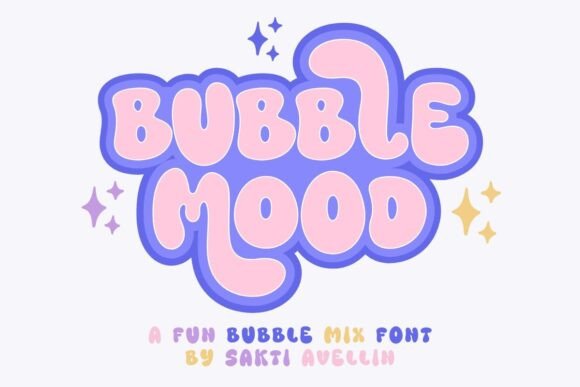
There's a certain energy that comes from breaking the mold. In the world of design, where clean lines and minimalist sans serif fonts often dominate, choosing a typeface with a distinct personality can feel like a bold move. Enter Bubble Mood, a premium font that isn't just a collection of letters; it's a meticulously handcrafted personality. This isn't your standard geometric or rounded typeface. Each character in Bubble Mood has its own singular, memorable shape, designed to feel organic and full of life. Its true magic, however, is unlocked when you start to play. By daringly intertwining uppercase and lowercase letters, you create a visual dance that is both dynamic and uniquely captivating.
The appeal of Bubble Mood lies in its versatility within its playful nature. It’s a creative font that comes with alternative character blends, giving you the tools to fine-tune the rhythm and flow of your typography. This allows you to move beyond simple text and start crafting typographic compositions. Imagine a motivational quote on a t-shirt where the letters seem to bounce and interact with each other, or a brand name on a tote bag that feels less like a stamp and more like a piece of art. This is the power of a well-designed display font—it transforms the mundane into the memorable. Bubble Mood is engineered for this exact purpose: to breathe life and a hint of inspiring energy into everything from mugs and hoodies to digital banners and social media graphics.
Finding the Perfect Home for Bubble Mood's Personality
So, where does a font with this much character actually work? The key is to think of Bubble Mood as a headline or accent font, not a body text workhorse. Its rounded, irregular forms are designed to grab attention, making it a fantastic choice for logo design, especially for brands that want to project a fun, approachable, and creative identity. Think of a children's boutique, a quirky coffee shop, a podcast for creatives, or a small business selling handmade goods. In these contexts, Bubble Mood isn't just a typeface; it's a core component of the brand identity, instantly communicating a specific vibe.
Beyond logos, its applications in marketing and packaging design are extensive. Use it for headlines on your website, calls-to-action on landing pages, or the title of a special edition product. It excels in print-on-demand, turning everyday items into statement pieces. A tote bag with a clever phrase set in Bubble Mood becomes a conversation starter. A mug with an uplifting message feels more personal and heartfelt. For social media, it's a game-changer. A bold, eye-catching quote graphic using Bubble Mood can stop the scroll and increase engagement far more effectively than a standard font. It brings a tactile, human-made quality to the digital space, which is increasingly valuable in modern typography.
A Practical Guide to Using This Creative Font
Integrating a strong personality font like Bubble Mood into your projects requires a thoughtful approach. It’s not about replacing every font you use, but about knowing when and how to deploy it for maximum impact. Here’s a practical breakdown for designers, entrepreneurs, and creators.
Pairing for Balance and Hierarchy
Because Bubble Mood is a high-energy display font, it needs a grounding partner. The most effective font pairing will involve a simple, clean sans serif font or a classic serif font for body text. A neutral sans serif like Lato, Montserrat, or Open Sans provides a clean, readable foundation that allows Bubble Mood’s headlines to shine without creating visual chaos. If your brand leans more traditional or editorial, pairing it with a simple serif font can create a sophisticated contrast. The goal is to establish a clear visual hierarchy where Bubble Mood draws the eye for key information, and the secondary font delivers the supporting details.
Evaluating Project Fit and Readability
Before you commit, ask yourself: what is the primary goal of this design? If it’s to convey a sense of playfulness, creativity, and warmth, Bubble Mood is likely a strong candidate. However, for projects requiring a serious, corporate, or highly technical tone, it would be a poor fit. Always test the font in context. Mock up a t-shirt design, a social media post, or a website header to see how it feels. Pay close attention to readability, especially at smaller sizes. While its characters are distinct, the playful nature might reduce legibility in long sentences. Use it for short, impactful phrases where personality is more important than pure scannability.
Understanding the Included Assets
A quality creative font often comes with more than just the basic alphabet. Check the font package for alternate characters, ligatures (special connected letter pairs), and stylistic sets. These are the tools that allow you to customize the look and feel. Experimenting with different uppercase and lowercase combinations, as suggested by the font's design, can yield unique and personalized results. This level of detail is what separates a standard font from a valuable design asset. Finally, ensure you have the correct commercial license for your intended use, whether it's for personal craft projects or for commercial products you plan to sell. Proper licensing is a non-negotiable part of professional design work.
In the end, a typeface like Bubble Mood is more than just a way to write words. It's a tool for expression. It’s for the designer who wants to inject joy into their work, the entrepreneur building a memorable brand, and the crafter adding a personal touch to their creations. By understanding its strengths and applying it with intention, you can let Bubble Mood become the new, unforgettable aesthetic for everything you create.